What is measles?

Measles is a very contagious virus that spreads through the air when an infected person coughs or sneezes. It usually begins with a fever, cough, runny nose, and red or watery eyes. A few days later, a rash appears. Measles can cause serious health problems, especially in babies, pregnant people, and those with weak immune systems. The good news is that measles can be prevented with a vaccine.

Measles Symptoms

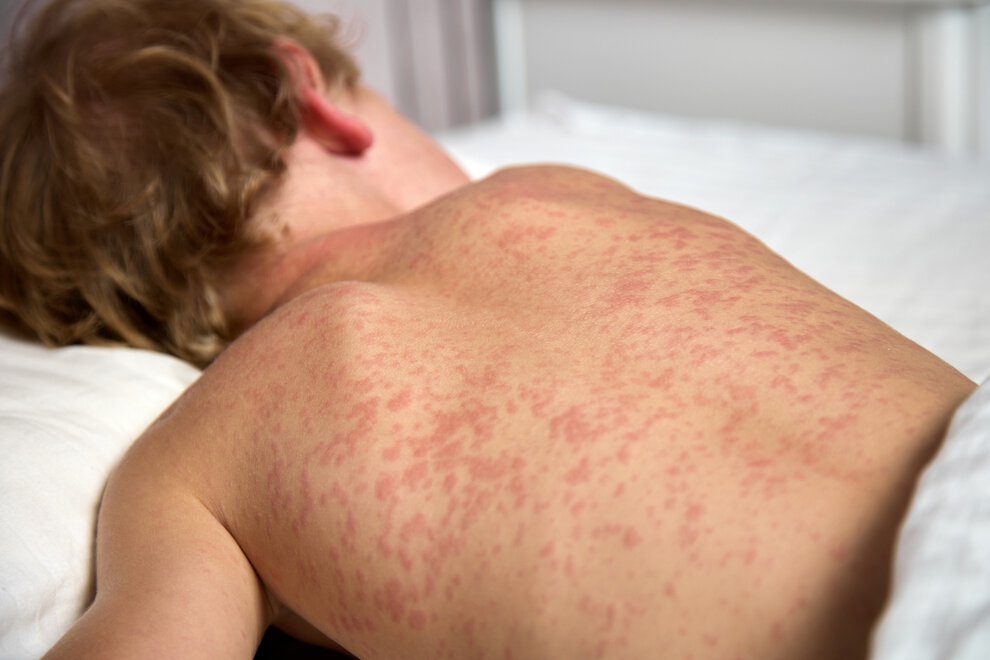
Common signs of measles infection include a high fever and rash. The rash usually appears 2 to 3 days after the first symptoms. It starts on the head and spreads down to the rest of the body.

In addition to a fever and rash, other measles symptoms may include:

  • Cough
  • Runny nose
  • Red or watery eyes

Symptoms usually begin 7 to 12 days after exposure, but it can take up to 21 days. Fever is often the first sign. The rash typically appears about 14 days after exposure, about 2 to 3 days after the fever starts.

How contagious is measles?

Measles spreads incredibly easily, even with brief contact. It can pass from person to person through the air and often spreads before someone realizes they are sick. The following facts show just how quickly measles can move through a community.

90% of unvaccinated people exposed to measles become infected
12-18 people can be infected by a single person with measles
Up to 8 days of contagiousness without knowing you are sick

How does measles spread?

Measles spreads easily from person to person through the air when someone coughs or sneezes. The virus can stay in the air or on surfaces for up to two hours. A person can get measles just by entering a room where someone with measles was earlier, even if that person has already left.

Even a short exposure can make someone sick if they are not up to date on the measles vaccine or have never had measles before. People with weakened immune systems are at especially high risk of getting infected.

What are the risks of measles?

Measles can lead to serious complications, such as pneumonia, encephalitis (swelling of the brain), deafness, intellectual disability and even death.

1 out of 5 people who get measles will be hospitalized
1 in 20 children with measles will develop pneumonia
1 in 1K people with measles develop brain swelling (encephalitis)
2 out of 1000 people with measles will die

Complications caused by the virus can occur in as many as 3 out of 10 cases. Complications are most often seen in children under 5 years of age, adults over the age of 20, pregnant women, and individuals with a weakened immune system.

Measles infection can also affect the immune system, leading to problems like immune amnesia and, rarely, subacute sclerosing panencephalitis (SSPE).

Immune amnesia is when the measles virus wipes out immune memory of other harmful viruses and bacteria. Immune amnesia can erase up to 73% of immune memory. SSPE usually develops 7 to 10 years after someone has measles. It is a rare but very serious condition that causes ongoing brain damage and almost always leads to death. There is no cure for SSPE, but it can be prevented by getting the measles vaccine.

Measles Vaccine: How Effective Is It & When Should You Get It?

The best way to prevent measles is with the MMR (measles, mumps, rubella) vaccine. The measles vaccine is highly effective at preventing measles. Two doses of the vaccine are about 97% effective at preventing measles. One dose provides about 93% protection.

The measles vaccine is most often given as the MMR vaccine, which also protects against mumps and rubella.

People who get the full two-dose series on schedule are usually protected for life against measles.

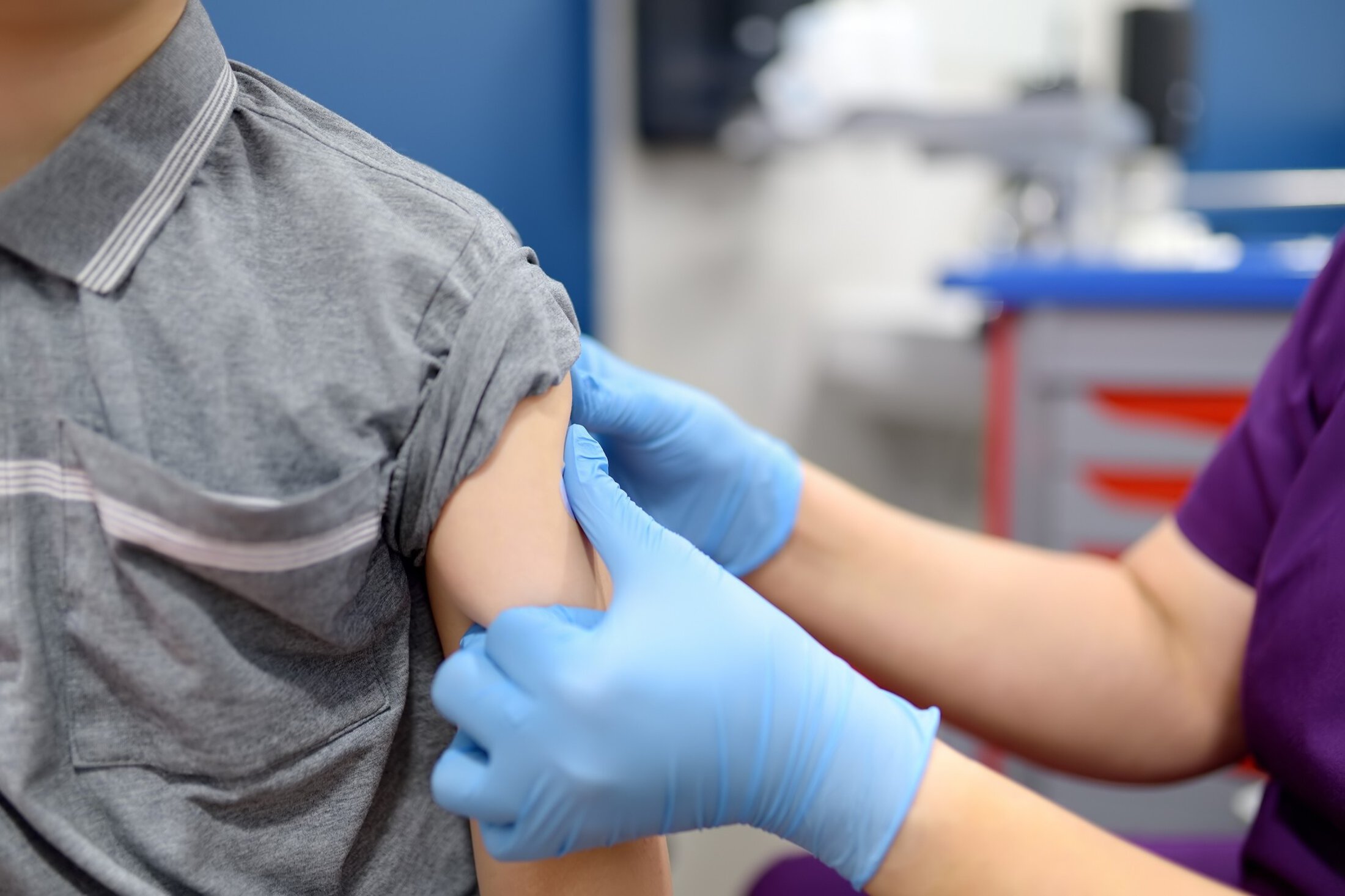
A boy is being vaccinated. A child is given a vaccine during an epidemic or outbreak of a disease. A kid during routine vaccination

When Should You or Your Child Get the Measles Vaccine?

In the United States, the recommended schedule for the MMR vaccine (measles, mumps, rubella) is:

Children

  • First dose: Between 12 and 15 months of age. The measles vaccine is recommended at 12 to 15 months because that’s when maternal antibodies start to diminish, so the immune system is ready.

  • Second dose: Between 4 and 6 years of age, before starting school.

Early Vaccination in Infants and Children (in certain situations)

  • Babies younger than age 6 months cannot be vaccinated yet but may have some protection from antibodies passed to them during pregnancy.

  • Babies 6 to 11 months old may receive one MMR dose before travel overseas or during an outbreak. They still need the routine two doses later.

  • Children older than 12 months who have received a single dose of measles vaccine may qualify to receive their second early, as long as 28 days have passed since first dose.

  • During a measles outbreak, public health authorities and pediatric experts do recommend giving the second MMR dose early for children ages 1 to 4 years if they live in or are traveling to an area with active transmission. If the state or local health department confirms an outbreak in your region, an early second dose is appropriate and recommended.

  • If families choose to get the second MMR dose early, it will count for school entry as long as the first dose was given at 12 months of age or older, and at least 28 days have passed since the first dose.

Adults

Adults who have not been vaccinated or don’t have immunity should get at least one dose of MMR, and often two doses depending on age, travel, or exposure risk.

What if my child is behind?

It’s never too late to catch up. MUSC Health is here to help. Call MUSC Health or your child’s healthcare provider to get information and support for scheduling measles vaccination. For those who qualify, the second dose can be given as soon as 28 days after the first. Your healthcare provider will offer personalized guidance based on your family’s needs to help ensure the strongest possible protection.

Side Effects of Measles Vaccine

Common side effects from the vaccine include soreness and a mild rash or redness at the injection site, a fever, and temporary pain or stiffness in the joints.

Measles Vaccine Safety

Numerous studies conducted over many years in multiple countries have confirmed the benefits of the MMR vaccine. Preventing measles, mumps, and rubella far outweigh the minimal risks associated with vaccination. In contrast, contracting measles can lead to severe health outcomes. Before the vaccine's introduction, there were up to 500 U.S. deaths annually from measles, all of which are now preventable through vaccination.

Studies have repeatedly found no credible link between life-saving childhood vaccines and autism. The original report claiming that the MMR (measles, mumps and rubella) vaccine causes autism was retracted due to fraudulent data, and the report’s author was sanctioned by scientific bodies and lost his license to practice medicine.

Frequently Asked Questions

If you or your child may have been exposed to measles, it’s important to take a few steps right away to protect your family and others.

According to the CDC, measles exposure is defined as sharing the same indoor airspace (e.g., room, home, clinic waiting area) with an infectious person, or being in that area up to 2 hours after the infected person has left. The virus is highly contagious, spreading via respiratory droplets and airborne particles.

Measles Exposure in Fully Vaccinated People

  • If you are vaccinated (especially with two doses of MMR) and exposed to measles, you are likely protected, as the vaccine is approximately 97% effective.
  • You should immediately contact a healthcare provider to confirm your status, monitor yourself for symptoms (fever, rash, cough) for 21 days, and isolate if symptoms develop.

Measles Exposure in Unvaccinated People or Those Unsure of Vaccination Status

  • Call your healthcare provider right away. They can check your family’s health records and confirm vaccination status. Two doses of the MMR (measles, mumps, rubella) vaccine provide strong protection. If needed, your healthcare provider can arrange to have you or your child examined without putting others at risk.
  • Everyone in the house should stay home to not get your neighbors or people outside of your home sick. Keep exposed family members away from family members that are not sick.
  • Understand quarantine guidance. People who are not fully vaccinated may be asked to quarantine for up to 21 days after exposure, which is the period during which measles symptoms can appear. Quarantine separates and restricts the movement of people who were exposed to a contagious disease to see if they become sick. These people may have been exposed to a disease and do not know it, or they may have the disease but do not show symptoms.
  • Vaccination within 72 hours after exposure may help avoid quarantine. In some cases, getting the MMR vaccine soon after exposure can protect against illness and may prevent the need for quarantine. A healthcare provider can help determine whether this is an option for you or your child.
  • Watch for symptoms. Measles symptoms usually appear 8 to 12 days after exposure and can include fever, cough, runny nose, red eyes, and a rash that spreads from the face downward.
  • Call before coming in for care. If symptoms develop, do not go directly to a clinic, urgent care, or emergency department without calling first. Calling ahead allows staff to give instructions and protect other patients.


If the person who is sick gets rapidly worse or has any of the symptoms below take them to the emergency department of a hospital immediately.

Seek emergency care if experiencing:

  • Trouble Breathing
  • pain when breathing or coughing
  • Dehydration (dry nose and mouth, urinating less, crying without making tears)
  • Fever or headache will not stop
  • Confusion, decreased alertness, or severe weakness
  • Blue color around the mouth, low energy, or difficulty feeding (for young children)

Call before coming in for care. Calling ahead allows your care team to take safe care of you while also protecting patients and those caring for you!

If you have questions or concerns, the care team at MUSC Health is here to help guide you through next steps and ensure your family gets safe, appropriate care.

Children with measles should stay home from school or childcare until at least 4 full days after the beginning of the rash, when they are no longer contagious.

During a measles outbreak:

  • Children who have not received a measles vaccine (MMR or MMRV vaccine) should be excluded from school.
  • Unimmunized children who have not had a known exposure to someone with measles can return to school or childcare immediately after they receive a dose of MMR or MMRV vaccine.
  • Unimmunized children who have been exposed to someone with measles but receive a dose of MMR or MMRV vaccine within 72 hours of their first exposure can return to school immediately.
  • Unimmunized children who have been exposed to someone with measles but receive a dose of MMR or MMRV vaccine more than 72 hours after their first exposure should be excluded from school for 21 days from the time of the last (most recent) exposure.
  • Unimmunized children who do not receive MMR or MMRV vaccine during the outbreak, regardless of whether they have a known exposure, should be excluded for 21 days after the onset of rash in the last case of measles in the school or community.

Your healthcare provider can let you know when it is safe for your child to return to school or childcare. This will help avoid spreading measles to others who may be unable to receive the vaccine because of their age or certain medical conditions.

Most people recover from measles completely on their own. For uncomplicated cases, bed rest, drinking plenty of fluids and over-the-counter medications to reduce the fever and headache may help make sick individuals more comfortable. For those who require hospitalization, supportive care is the only treatment.

Anyone who has either not had measles or who has not been adequately vaccinated with an MMR vaccine can easily get the disease if exposed. Of the people who become infected, those at highest risk of severe illness and complications are children less than 5 years of age, pregnant women, individuals with a weakened immune system, and adults older than 20 years.

  • If you can become pregnant, it’s important to get the measles vaccine before pregnancy. The measles vaccine cannot be given during pregnancy, and measles infection can cause serious birth defects. Getting vaccinated ahead of time helps protect both you and your baby.
  • If you are pregnant and think you were exposed to measles, call your healthcare provider right away. There are treatments that may help lower your risk of getting sick.
  • If you are not vaccinated and have a weakened immune system (because of an illness or certain medicines), and you live in an outbreak area, try to avoid large crowds and close contact with many people to help reduce your risk.

If you and your family members have received the recommended 2 lifetime doses of MMR, you are considered protected for life and do NOT need any booster, even after an exposure.

In general, healthcare providers do not recommend checking titers for immune status as these can be unreliable. It is helpful to obtain your records of immunization if you can. If no documentation exists, the CDC says you should get vaccinated with MMR. There is no harm in receiving another dose even if you were previously vaccinated.

Check:

  • Childhood medical records
  • Immunization records from school
  • Employment or university health documents
  • Your state immunization registry (SC has a registry you can request data from)

Babies younger than age 6 months cannot be vaccinated yet but may have some protection from antibodies passed to them during pregnancy. Consider delaying travel to locations with measles outbreaks to avoid risks of severe illness.

Babies age 6 to 11 months old should receive their first MMR vaccine dose at least two weeks before traveling. They will still need the standard 2-dose series if they received a dose before age 12 months.

Babies 12 months and older should receive their first dose of MMR vaccine in addition to the other vaccines recommended at that age. Infants 12 months and older should also receive a second dose of the MMR vaccine 28 days after the first dose.

Masks (especially N95 respirators) act as a barrier that blocks airborne measles particles. Surgical masks offer moderate protection; cloth masks offer the least. The CDC also advises masking if you are exposed while you wait to confirm your immunity or vaccination status. Masking is considered a supplemental measure, not a replacement for vaccination.

Wear a mask if:

  • There is a known measles outbreak in your community
  • You or a family member has been exposed
  • You are around unvaccinated, infants, or high risk individuals
  • You’re visiting healthcare settings where measles exposure risk is higher

Best choice:

  • N95 (ideal)
  • Surgical mask (better than cloth)
  • Cloth mask only if nothing else is available

If fully vaccinated:

Your risk is already low, but masking in crowded indoor public spaces during an outbreak can add an extra layer of protection.

This dilution effect likely lowers the risk. But “lower” does NOT mean “zero." If exposure occurs outdoors at close range, infection is still very possible. Outdoors or indoors, your strongest safeguard is full MMR vaccination, which provides 97% protection after two doses.

The measles vaccine (MMR and MMRV) is the best way to protect yourself and others against measles. About 93% of people vaccinated with one dose have permanent protection and about 97% get protection after two doses of measles vaccine. The vaccine is recommended for all infants at 12 months of age. A second dose is recommended between 4 to 6 years of age. Current measles vaccination is also a requirement to attend childcare or school in South Carolina unless there is a valid exemption.

Find a Provider

MUSC Health has a doctor or provider for you. Search by location, keyword or specialty.

Accepting New Patients
Molly Mead

Molly Mead, M.D.

Specialties
  • Pediatrics
Locations (1)
  • Charleston, SC
Accepting New Patients
Michelle Nsianya

Michelle Nsianya, M.D.

Specialties
  • Pediatrics
Locations (1)
  • Charleston, SC
Accepting New Patients
Jesper Jiang

Jesper Jiang, M.D.

Specialties
  • Pediatrics
Locations (1)
  • Charleston, SC

Pediatric Emergency Room Locations

MUSC Children's Health Pediatric Emergency Department

Address
MUSC Shawn Jenkins Children's Hospital
10 McClennan Banks Drive
1st Floor
Charleston, SC 29425
Get Directions
Hours
Open 24 Hours
Specialties
  • Pediatric Emergency Care
  • Pediatric Emergency Medicine