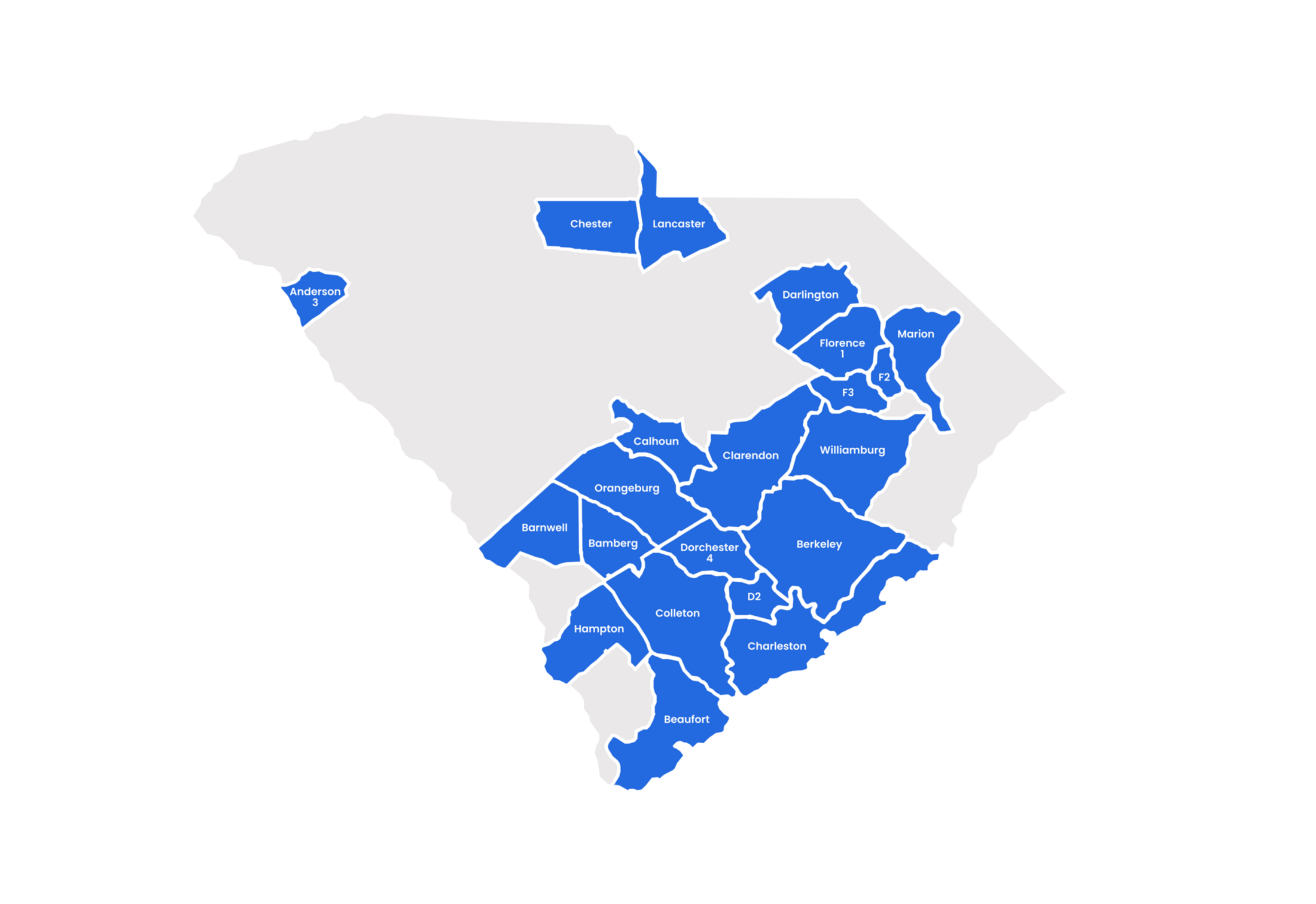
The MUSC BCCW School Wellness Initiative is an evidence-based implementation model designed to create sustainable, health-promoting school environments. This Initiative supports schools in embedding wellness into every facet of the educational experience, including curriculum, policies, food service, physical and social environments, and community partnerships. By aligning health and learning, this Initiative empowers schools to make lasting changes that benefit both students and staff.
Participating schools receive hands-on support and motivation as they implement proven strategies that promote healthy eating, physical activity, and social emotional wellness. Our team of program coordinators provide continuous guidance through training, technical assistance, and resource sharing. Coordinators work closely with districts and schools to identify needs, select evidence-based strategies, and adapt them to fit the unique context of each school community.
A central feature of the Initiative is the establishment of a school wellness committee. These committees, made up of school staff, administrators, families, and community partners, play a critical role in assessing the current health environment and identifying unmet needs. Based on these annual assessments, each school develops an action plan using our School Wellness Checklist, a structured implementation tool that helps schools select targeted strategies, track progress, and celebrate successes throughout the year.
To reinforce accountability and sustainability, the Initiative includes a recognition and incentive structure. At the end of each school year, schools that meet the minimum criteria are awarded a monetary wellness award, with the highest-scoring schools receiving special acknowledgment. These funds are reinvested in future wellness efforts, allowing schools to expand and deepen their efforts over time.
Through this model, the School Wellness Initiative not only strengthens school health systems but also builds capacity for long-term cultural change. By equipping schools with tools, guidance, and recognition, the program fosters healthier learning environments where children, educators, and staff can thrive physically, emotionally, and academically.